Toilet Repairs in Strathpine
Cisterns that run non-stop, puddles at the pan base and tanks that barely refill make up the calls we get, and nearly all trace to worn parts inside the cistern. Most toilet repairs Strathpine households book fall into that category, and Strathpine Plumbing Services covers them all. Every job is done by a licensed plumber working across Strathpine and the streets nearby.
If we're late, $100 comes off your bill

- Licensed and InsuredEvery job done by a licensed plumber. QBCC No: 15024607
- Fixed Quote FirstFlat-rate pricing, agreed before any work starts
- Lifetime Labour WarrantyBacked by our Fix-It-or-It's-Free guarantee (T&Cs apply)
- $0 Call-Out FeesNo extra charge for nights, weekends or public holidays
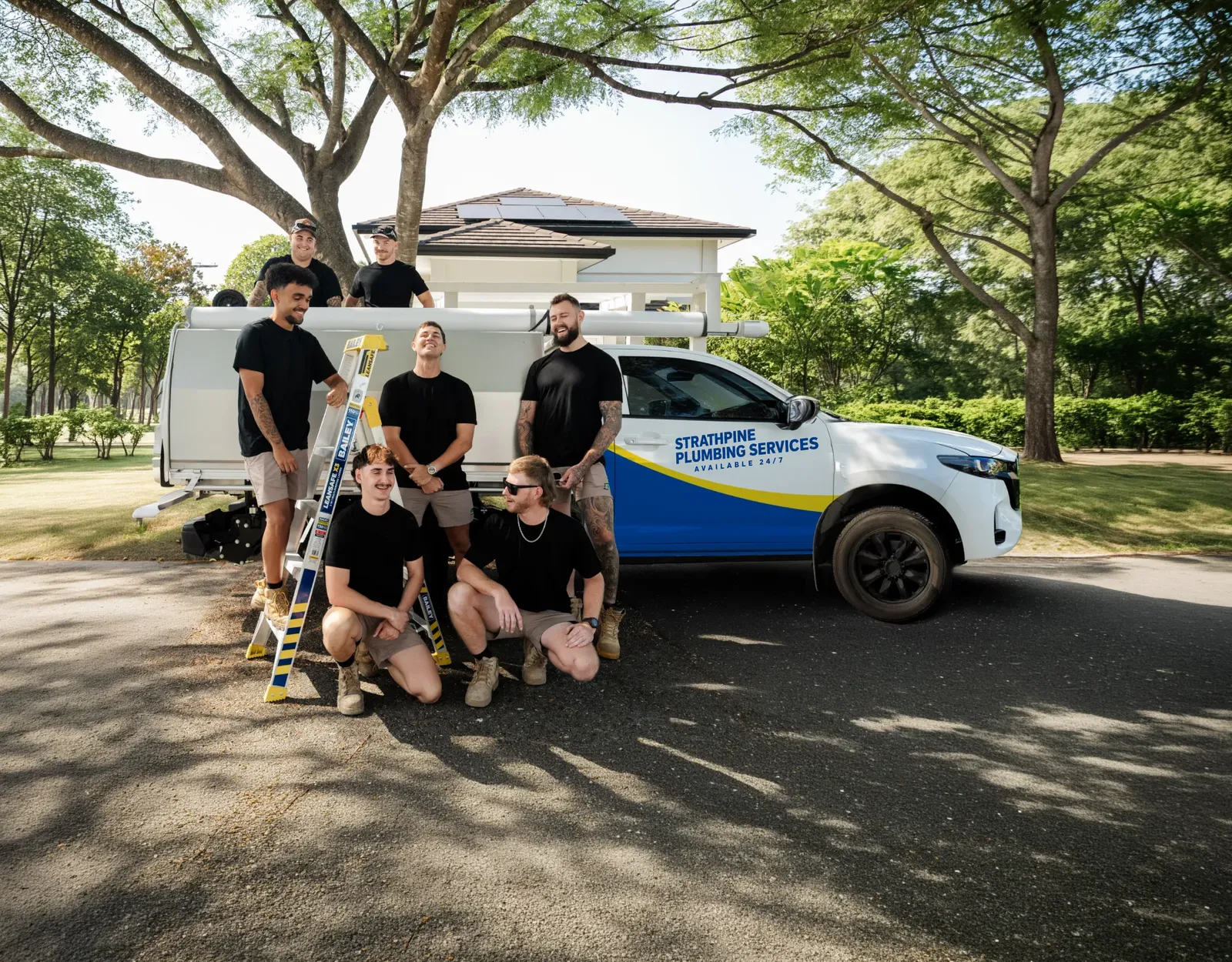
We sort running cisterns, base leaks, sticking buttons and slow fills. This page explains what fails, who may legally fix it and what shapes the price. The wider fixture picture sits on our tap and toilet work page.
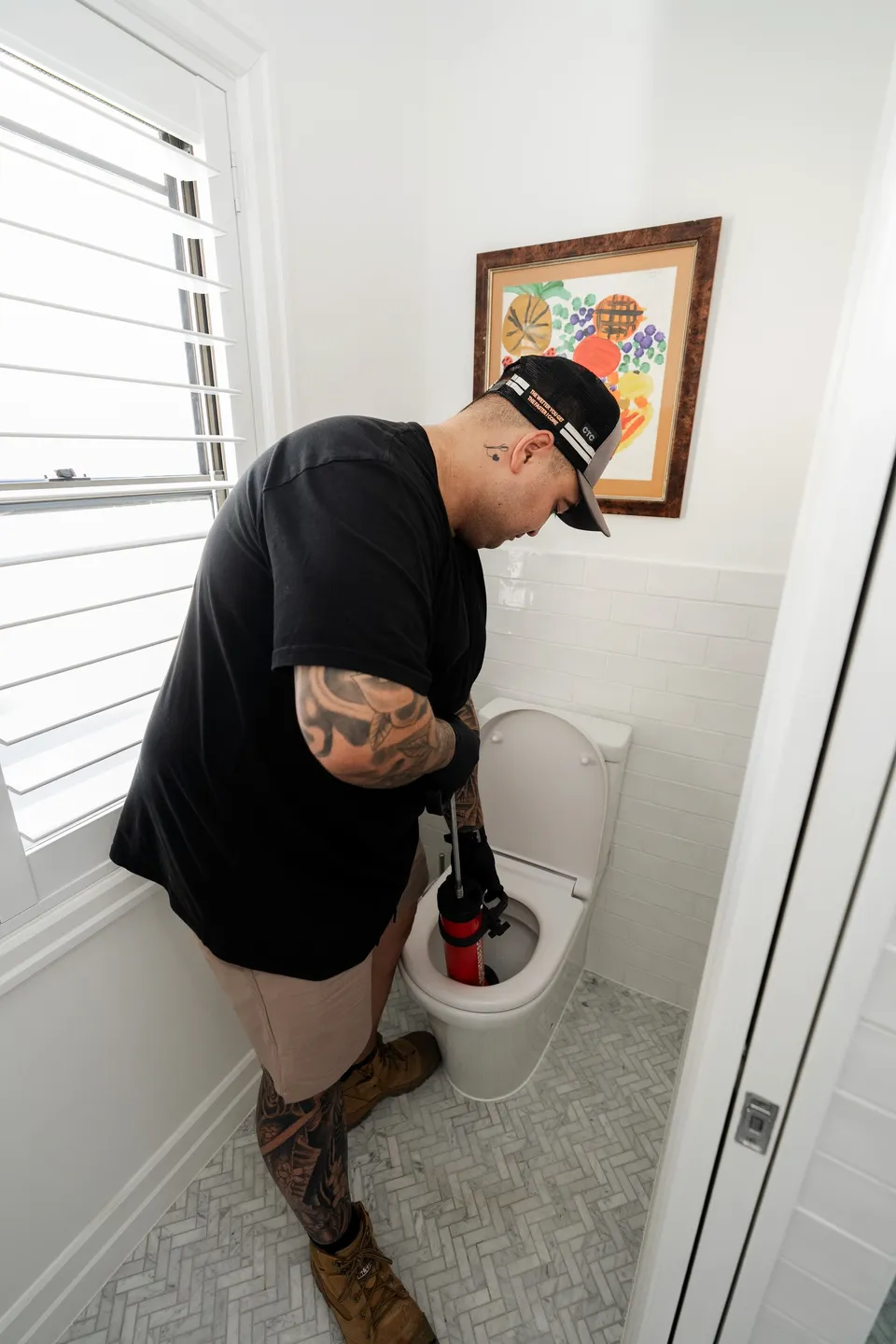
The Three Parts That Usually Fail
Three parts cause most cistern faults: the inlet valve, the outlet valve and the seals, and each announces itself differently.
The inlet valve
refills the tank after each flush and closes when the float reaches its mark. Once the valve wears or blocks, the tank refills at a trickle or overfills without stopping.
The outlet valve
holds the water in the cistern until the flush button is pressed. A worn washer on the outlet valve lets water creep down into the pan, and the tank then tops itself up on repeat.
The seals
close the joints: the washer between cistern and pan, and the rubbers where the pan meets the drain. When the seals perish, water escapes and sewer smell can follow.
A leaking or running cistern is most often cured by renewing the inlet valve and the outlet washer, while the porcelain is sound. Two other symptoms sit nearby:
Weak or half-hearted flushes
usually trace to a cistern filled too low, rim jets clogged with scale, or a button that sticks halfway.
A cistern that will not fill
, with the supply on, points to an inlet valve past its best, a float riding below its mark, or a stop tap left partly turned.
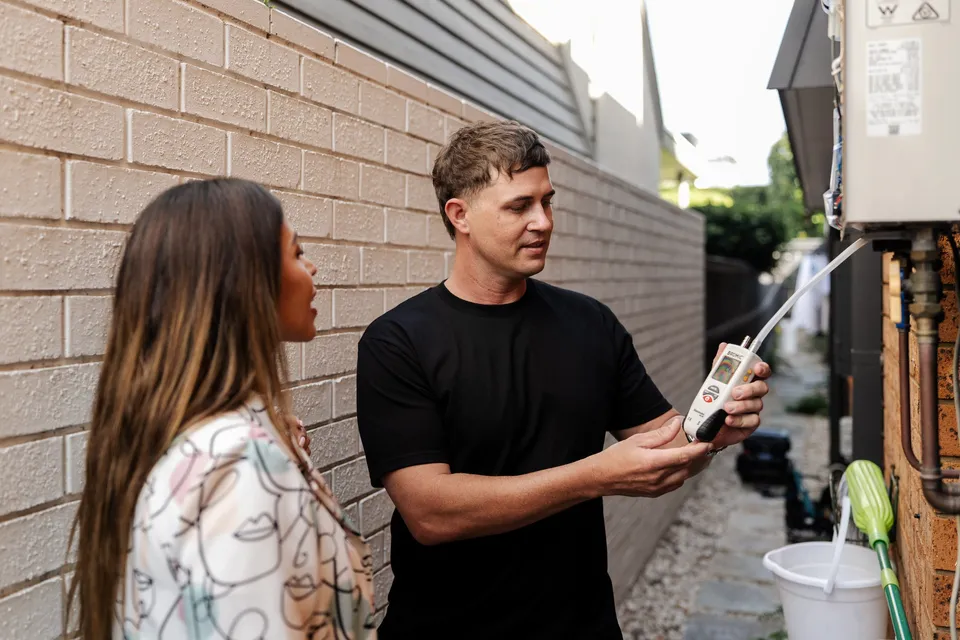
Damp Floor Around a Toilet
A toilet leak shows in one of three places, and each place names its part.
At the cistern-to-pan joint
the washer between the two has failed, and water weeps down the join every time you flush.
Around the base
the connector joining the pan to the floor drain, its rubber seal, or the pan itself cracking.
At the supply end
the mini stop, as the cistern's shut-off tap is known, or the braided supply hose is weeping under the tank.
A sewer smell in the room without visible water can mean those same rubbers have perished or shifted, letting drain air past the pan.
One quick check settles a silent leak. Squeeze a few drops of food colouring into the tank, then wait without flushing; colour seeping through to the bowl means the outlet is leaking. A flush afterwards clears it, because the colouring does not stain ceramic bowls.
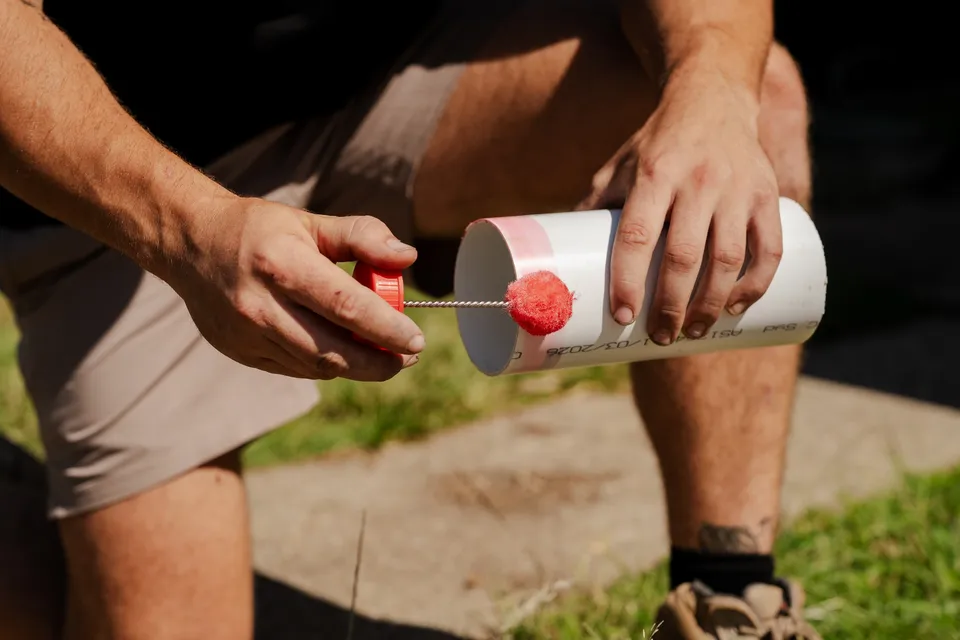
Who May Repair a Toilet in Queensland
The QBCC draws the line, and it is a short list. A cistern's drop valve washer, its float valve washer and its suction cup rubber are unregulated work, so a person with the needed knowledge and skill may swap them, provided the result still complies.
Every other toilet repair counts as minor work: a QBCC licensee carries it out, without a council permit and without a Form 4 afterwards. Seals, pan connectors, buttons, both valves and supply connections all sit on the licensed side of that line.
Rentals follow their own rulebook. A toilet that blocks or stops working sits on Queensland's emergency repairs list for rented homes. The tenancy rules put the repair duty on the owner or manager, and the tenant tells them as soon as a fault appears.
Where Strathpine Toilets Show Their Age
The suburb's houses went up mainly across the 1960s to the 1980s, and many still run their second or third set of cistern internals. The attached complexes off Dixon Street add a second pattern: shared supply lines and tight bathroom cavities that make a weeping mini stop harder to reach and quicker to matter.
Older cisterns also tend to have had parts swapped piecemeal over decades, mixing valve generations inside one tank. We check what is actually in there before quoting, because a mismatched inlet valve can cause the very running fault you called about.
The full diagnosis lives on our running toilet guide. If the whole suite is past saving, the replacement path is on our toilet installation page.

What Affects the Cost of a Toilet Repair
Four things set the price: the failed part, cracked porcelain, how much room we have at the cistern, and how many pieces we renew in one visit. The fixed quote follows the inspection, so nothing starts before you approve the figure.
Two things can move a repair toward a replacement:
Cracked porcelain
in the cistern or pan cannot be patched, so the fixture itself has to go.
Repeated repairs
on one tired suite can work out dearer over time than a single replacement, judged job by job.
Every cistern or pan we supply carries WaterMark certification plus registration under the Water Efficiency Labelling and Standards scheme, the two marks a licensed plumber needs before fitting one lawfully. The same visit can often handle a dripping mixer at the basin too, so ask about tap repairs when you book.
How the Repair Visit Runs
- 1

Describe the problem
Phone (07) 3524 7163 or fill in the form with what you're seeing in Strathpine. The more we know, the better we can prepare.
- 2

We find the fault
We take the cistern lid off, watch a full flush, test the inlet and outlet valves and check each seal from the mini stop to the floor. That shows which part has failed and what the fix needs.
- 3
Agree on the price
A fixed quote comes before any work starts: flat-rate pricing, no hidden fees, and your go-ahead first.
- 4

Pay on completion
Card or EFTPOS on site when everything's working, or ask us about Fix now, pay later.
Plumbing job in Strathpine?
$0 call-out fees, available 24/7, and same-day where we can.
Toilet Repair Questions From Strathpine
Call (07) 3524 7163What are the three common faults in a cistern toilet?
The inlet valve, the outlet valve and the seals. A worn inlet valve leaves the cistern refilling at a trickle or never shutting off. A tired outlet valve lets water slip into the bowl, and failed seals leak or let sewer smell into the room.
What makes a toilet keep running after a flush?
Usually a worn outlet washer. Water slips past the washer into the bowl, so the inlet valve keeps topping the cistern up without end. The other cause is an inlet valve that never shuts off.
What causes a leak at a toilet base in Strathpine?
Water pooling at the base usually means the pan connector, its rubber seal, or the pan itself cracking. Dampness at the cistern-to-pan joint points to the washer between them. A weeping supply connection can also send water across the floor.
Can I fix a leaking toilet myself in Strathpine?
Yes, but only for three cistern rubbers. The QBCC treats the drop valve washer, float valve washer and suction cup rubber as unregulated work a capable person may do, provided the result still complies. Every other toilet repair belongs to a licensed plumber.
Can a cracked cistern or pan be repaired?
No. Cracked porcelain is where repair ends and replacement begins, because no washer fixes broken ceramic. We would quote on a new cistern or a new pan, and the replacement path is on our installation page.

Call Us About Your ToiletWe'll call you back.
Phone (07) 3524 7163 for a licensed plumber in Strathpine. We work under QBCC No: 15024607, with flat-rate pricing, no hidden fees and same-day where we can.
To claim your $0 call-out fee, call (07) 3524 7163 today.